Letter No. 4
Get in the Car
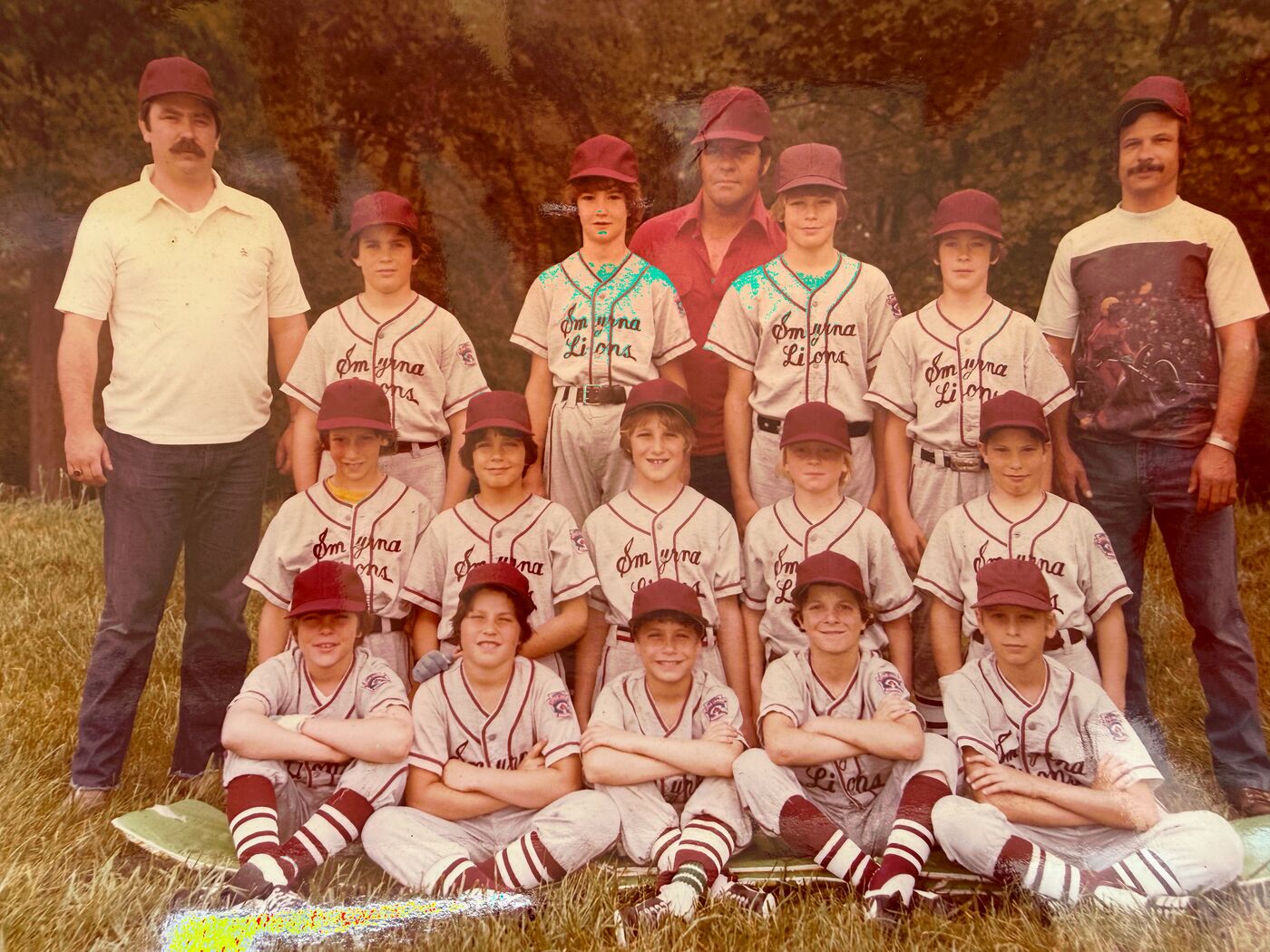
I was fourteen years old, sitting in a Delaware State Police troop in Dover, hat and glove in hand, wearing my dirty baseball uniform and crying.
They’d talked about arresting me. I pictured the fingerprints. The jail cell.
But I wasn’t really afraid of the troopers.
I was afraid of my father walking through that door.
The art of getting caught
Dad grew up in the Bronx with my Uncle Frank, my godfather Charlie DiPiro, and a pack of friends who made my petty crime look like a church picnic.
At twelve or thirteen, they raised hell through all five boroughs of New York, mainly the Bronx.
When the police caught them, Dad said, they’d give false names and say they had no family. No driver’s licenses. No centralized database to settle the question. They’d be sent to a juvenile home.
Then they’d sneak out at night.
Other summers, they’d go camping for weeks. No phones. No GPS. No parent checking a little dot on a screen.
Out they went. Back they came.
I grew up on those stories. They were funny as hell. They were also a lesson in going out into the world and figuring things out.
Our house in the center of Smyrna was the gathering place for my friends. Boys drove in from the country and we found ways to entertain ourselves.
Beside our house was a maze of boxwood gardens. In winter, snowdrifts turned it into tunnels.
We’d hide in there and lob snowballs at cars passing on Main Street.
We hit police cars, too.
The cops chased us into our backyard. Mom tried to call me into the house. Dad laughed and warned her that she’d give me away.
His reaction to my mischief was often some combination of What the hell were you thinking? and How the hell did you get caught?
Then I gave him a story he’d be telling for the rest of his life.
Three boys. One hand.
We’d just played an away game with the junior varsity baseball team. On the bus ride home, a car pulled up beside us.
We waved. They waved back.
Three of us mooned them.
The car turned into a state trooper station.
Oh, shit.
Every boy in the back of the bus suddenly wanted a seat up front. The whole team tried to disappear into the first few rows.
A trooper pulled us over and asked who did it.
I raised my hand.
The other two didn’t. I wasn’t going to give them up.
The trooper took me off the bus, put me in the back of his car, and drove me to the station. The woman we’d mooned eventually declined to press charges. That didn’t help much while I sat there in my uniform waiting for Dad.
He worked at the Port of Wilmington. He had to drive to Dover to collect a son who had just flashed his ass at the wrong car.
I knew I was screwed.
Are you fucking kidding me?
Dad came in with that Bronx bearing, took one look at me, and said, “You. Get in the car. Now.”
I got up and started slowly down the hallway.
Before I reached the door, he turned to the troopers. I heard his voice rise.
The substance was unmistakable: Are you fucking kidding me? When I was his age, we were stealing cars. This kid mooned somebody, admitted it, and you took him off a bus full of teammates and brought him here alone?
I kept walking. I could still hear him ripping into them.
Dad wasn’t arguing that mooning a stranger was fine. He was angry with me. I was grounded, and I was going to hear about it at home.
But there was his kid, fourteen years old, the only one who told the truth, sitting alone in a police station. Dad was not going to let that pass.
The next morning he took off work and came to school with me. Principal Buddy Lloyd, a former wrestling coach, and our JV baseball coach, Mr. Robinson, were there.
Dad went at them, too.
Three boys did it. One admitted it. One was being punished at school.
And where the hell was the adult responsible for us when a trooper took a boy away? Dad said he would have climbed into that police car himself.
Then he told Mr. Robinson I was done playing for him.
I had played baseball since I was seven. That was my last game.
Dad didn’t raise me without consequences. In those days, trouble at home could mean his belt or Mom’s wooden spoon. The nuns at Holy Cross school paddled us, too.
He could be tough. Then he’d tell me, “There’s nothing you could do that I haven’t done ten times worse.”
Knowing his stories, I believed him.
Two hours north
After baseball, I picked up a tennis racket and couldn’t put it down.
A year or two later, I borrowed Dad’s car for a weekend of tennis and left my racket bag in the back. Early Monday he drove north from Smyrna to Wilmington. I had an away match in southern Delaware.
All my rackets were two hours in the wrong direction.
Dad got to work, found the bag, and sent a man from the shipyard down with it. The rackets arrived before I played.
No lecture. No heroic speech. He knew tennis mattered to me, so he got the damn rackets to the match.
That’s the dad I knew. He expected me to go out and handle myself. If I messed up, I’d answer for it. If I needed him, he’d show up.
The stories Nikko will tell
Now Nikko asks what it was like when I was a kid.
One TV for the whole house. A huge thing, the size of a small cabinet.
Three stations. You watched whatever they put on.
No friggin’ on-demand. Sometimes I’d wait weeks for a program I wanted to see. When it finally came on, that was an event.
No iPad. No phone in my pocket. No Nintendo Switch.
We rode in the car without seat belts, kids wherever they fit, while Mom smoked up front. I walked to school. I walked or biked to practice.
After school I could eat three peanut butter sandwiches, go to practice, then come home and nuke four hot dogs. We might have been the first family on our block with a microwave.
To Nikko, I must sound like Dad sounded to me.
I wonder what Nikko will tell his own kids one day. We only had Apple TV and YouTube. ChatGPT and self-driving cars were just getting started.
I’m glad we learned to put kids in seat belts. I don’t miss the cigarette smoke. Some things deserved to change.
But I worry about the part of childhood that disappears when we remove every risk, every unsupervised hour, every chance to be uncomfortable and figure something out.
I want Nikko to get muddy. Try things. Be scared and do them anyway. Learn that he can fall on his ass, get up, and keep going.
Tell me anyway
I don’t want to raise a boy who never gets into trouble. I want to raise one who can tell the truth, take the consequence, and still have the nerve to go back out there.
I already tell him my version of what Dad told me: there’s nothing you can do that I haven’t done, been caught doing, or been punished for.
I’m sure he’ll eventually prove me wrong. But I want him to know he can tell me.
I can imagine getting a call from school about some terrible infraction and thinking, That’s it? That’s what we’re making a federal case out of?
I’ll listen. I’ll find out what happened. If he screwed up, we’ll deal with it. And if the adults around him need a reminder that they’re dealing with a kid, I’ll give them one.
I want him to look at me the way I looked at my dad. He might be scared of what I’ll say. He might know he’s in trouble.
I hope he tells me anyway.
And if I have to come get him, I’ll probably walk through the door thinking, Are you fucking kidding me?
Then I’ll give him my version of what Dad gave me.
“Get in the car, kid. We’re going home.”
— Rob